
Certified Automotive Locksmith
Online Course — Self-Paced
Welcome to your self-paced automotive locksmith training. Work through each week at your own speed — tap a week to expand its lessons, terminology, tool guides, and resources.
Introduction
This week, we'll be covering the fundamentals of identifying keys, unlocking cars, and understanding key terminology. Here are some instructions to help you make the most of your learning journey:
Practice Regularly: Locksmithing is a hands-on skill. Practice identifying keys, using lockout tools, and understanding terminology whenever you can. It's the key to mastery.
Study the Terminology: Familiarize yourselves with automotive locksmith terminology. This knowledge will be crucial in your future work.
Ethical Considerations: Remember the importance of ethics in this profession. Use your skills responsibly and always respect the privacy and property of your clients.
Stay Updated: The locksmithing field evolves with technology. Stay updated with the latest advancements, especially in electronic security systems.
Be Patient: Locksmithing can be challenging, but patience and persistence are your allies. With practice, you'll become proficient.
Enjoy the Journey: Most importantly, enjoy the learning process. The skills you're acquiring open doors to a fascinating and rewarding career.
We're here to support you in your learning journey, and we look forward to seeing your locksmithing skills flourish. Remember, the road ahead is filled with opportunities, and you hold the key to unlocking them. Best of luck with your studies!
Sincerely,
Xaviere and Glenn Letteer
Automotive locksmiths work with a specialized set of terminologies and terms related to vehicle locks, keys, and security systems. These are common terminologies used in the field of automotive locksmithing.
Keyway: The specific shape and profile of the keyhole in a lock cylinder.
Key Blank: A key blank is an uncut key that has the basic shape and profile of a key but lacks the specific cuts and grooves required to operate a lock. It serves as a starting point for creating a fully functional key by cutting or shaping it according to the lock's specifications.
DSD Data: Refers to depth and space data. It's a set of precise measurements and specifications that help locksmiths create or duplicate keys accurately to match a specific lock's internal components and depth levels."
Lishi: A specialized locksmith tool used for picking a lock, decoding the wafers depths, and cutting keys for a variety of locks, primarily automotive locks.
Key Code: A numeric or alphanumeric code that represents the unique combination of cuts needed to create a key for a specific lock.
FCC ID: (Federal Communications Commission Identification) refers to the identification number assigned to the remote key fob or keyless entry system used for a certain vehicle.
Transponder Key: A key with an embedded electronic chip that communicates with the vehicle's immobilizer system, providing added security.
Immobilizer System: A security feature in modern vehicles that prevents the engine from starting unless the correct transponder key is used.
Smart Key: A remote control device that can lock, unlock, and start a vehicle with proximity sensors in the key and vehicle. Usually referred to as “push to start” vehicles.
Remote (Key Fob): A remote control device that can lock, unlock, and start a vehicle with a remote start button, often integrated with a transponder key.
Lock Cylinder: The part of the vehicle's lock that houses the keyway and tumblers or wafers.
Tumblers or Wafers: Internal components within a lock cylinder that must be aligned correctly for the lock to turn.
Lockout: When a person is locked out of their vehicle due to lost or malfunctioning keys.
Key Cutting: The process of shaping a key blank to match the keyway of a lock.
High Security Key Cutting (Laser Cut Keys): The process of creating keys for locks that have advanced security features, often involving intricate and precise cuts on the key to match the lock's complex design.
Lock Rekeying: Changing the internal components of a lock cylinder to work with a different key.
Master Key System: A system where multiple locks can be operated by a master key, while each lock also has its own unique key.
Key Duplication: Making a copy of an existing key.
Lock Picking: The skill of manipulating lock components to unlock a lock without using a key.
Pick and Decoder Tools: Tools used by locksmiths to pick locks and decode key bitting information.
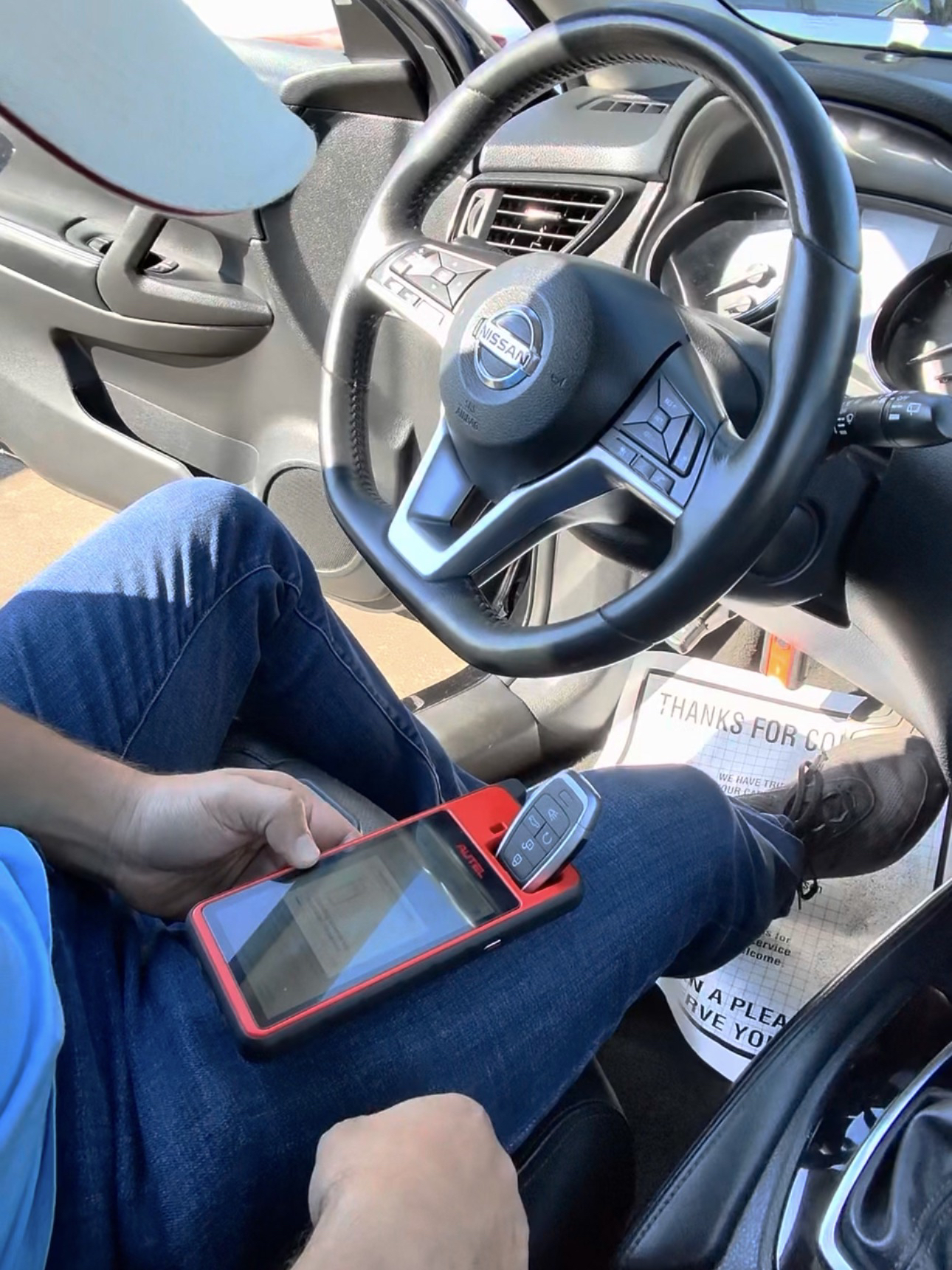
Key Programming: The process of configuring a transponder key to work with a specific vehicle's immobilizer system.
Broken Key Extraction: Removing a broken key fragment from a lock.
Keyless Entry System: An electronic system that allows for locking and unlocking a vehicle without physically inserting a key.
Valet Key: A key that provides limited access to a vehicle, typically used by valet parking attendants.
These are just some of the key terminologies used in the automotive locksmithing industry. The field is continually evolving with advancements in vehicle security technology, so locksmiths may encounter new terms and concepts as they work with modern vehicles.
What Tools Should I Have To Start My Company?
Starting an automotive locksmith company requires a well-rounded set of tools to handle a diverse range of tasks. Here's a list of essential tools and equipment that an automotive locksmith should consider having:
1. Key Cutting Machines
Reason: Essential for cutting keys to fit specific vehicles.
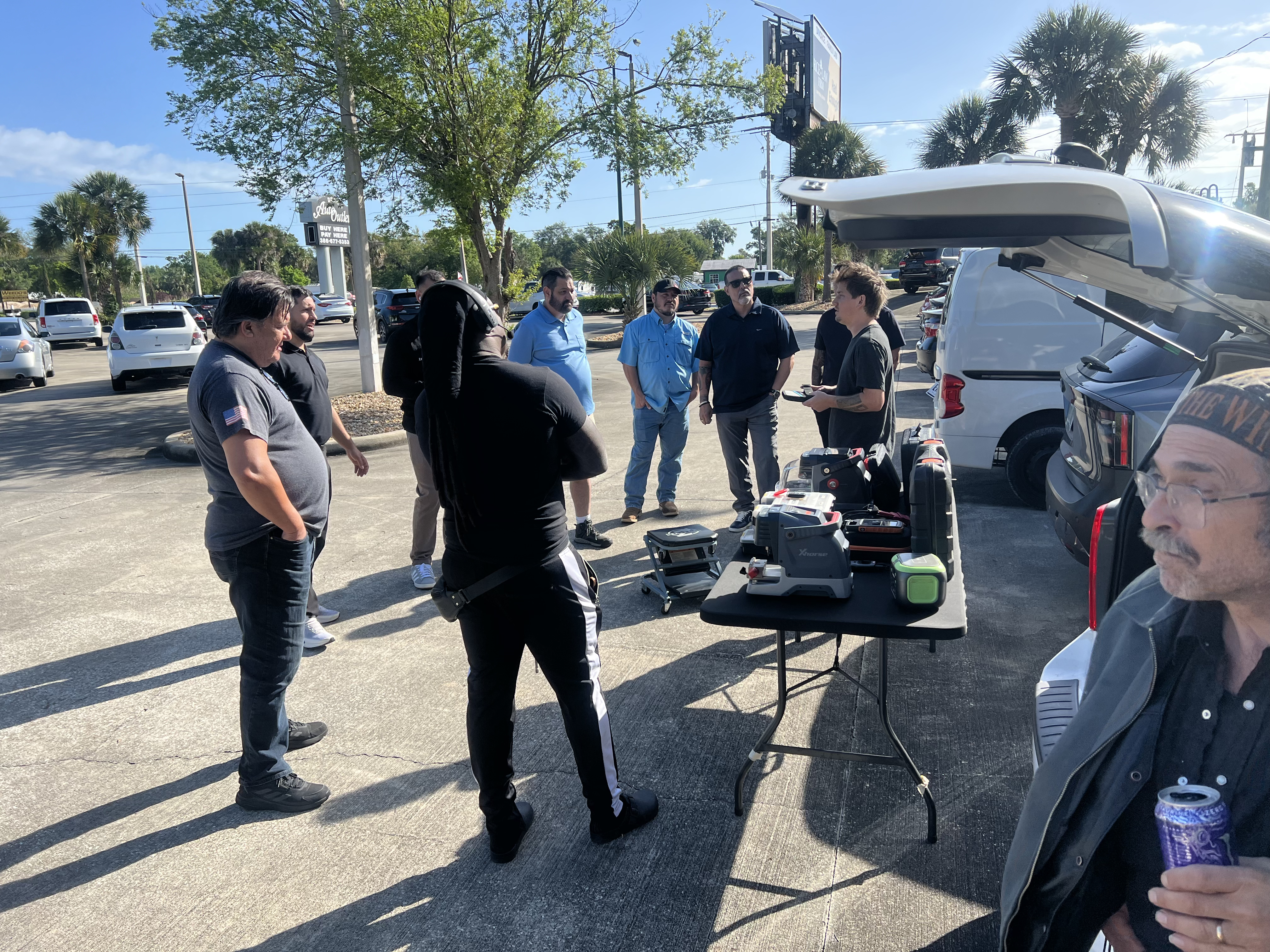
Recommended Models: Automatic: Xhorse Dolphin, Kukai - SEC-E9 Automatic Key Cutting Machine Manual: Keyline Bianchi 106 Semi-Auto Key Machine, HPC Blitz

2. Key Programmers
Reason: Necessary for programming transponder keys, smart keys, and remote key fobs.
Recommended Models: xTool G2 or G2 Turbo, Lonsdor, Autel MaxiIM IM508, Xhorse VVDI2.

3. Key Cloning Machines
Reason: Allows duplication of existing keys without the need for code or access to the vehicle.
Recommended Models: Xhorse VVDI Key Tool Max, KeyDIY KD-X2 (great for Volkswagen/Porsche/Audi)

4. Remote Generating Tools
Reason: Enables the generation of electronic remote key fobs.
Recommended Tools: KeyDIY KD-X2, KeyDIY KD-Max, Key Tool Max

5. Lishi Picks and Decoders
Reason: Useful for decoding and picking various types of locks.
Recommended Models: Lishi tools specific to your are and the types of vehicles commonly serviced.

6. Car Opening Tools
Reason: Necessary for non-destructive entry into vehicles during lockout situations.
Recommended Tools: Long-reach tools, wedges, air wedges, slim jim, Lishi tools. Access Tools is a great brand.

7. Key Extractors
Reason: Essential for removing broken keys from locks and ignitions
Recommended Tools: KLOM Broken Key Extractor Set Plus

8. Locksmith Books & Software
Reason: Aids in key code retrieval, cutting, and programming.
Recommended Software: InstaCode, GCodeOnline, AutoSmart Book and App

9. Tubular Lock Picks
Reason: Used for opening tubular locks.
Recommended Models: HPC 7-Pin Tubular Pick

10. Pinning Kits
Reason: Necessary for rekeying locks and creating new key sets.
Recommended Kits: Strattec Pinning Kits (STRAT-a-VARIOUS Universal Pinning Service Kit—705940 (STRATTEC)

11. Key Blanks
Reason: Stock a variety of key blanks to match different vehicle makes and models.
Recommended Blanks: Popular key blanks for the vehicles in your service area. GTL Flip Key Blade Set is great for building transponder keys and flip keys for vehicles.

12. Lock Lubricant
Reason: Ensures smooth operation of locks and reduces wear.
Recommended Lubricant: Pro-Tex-All Houdini Lock Lubricant is THE BEST.

13. Locksmith Bag or Toolbox
Reason: Keeps tools organized and easily transportable.
Recommended Options: Durable and spacious locksmith bag or toolbox.
14. Cordless Drill and Bits
Reason: Useful for removing or replacing screws and bolts.
Recommended Tools: Quality cordless drill and a set of drill bits.
Remember to invest in high-quality tools and stay informed about industry advancements. This industry is unique because you can invest $10,000 into your company and be fully stocked. It is not common to get the ball rolling and make $20,000+ a month. Don't stay stagnant with your tools, you have to spend money to make money but never be overwhelmed with the equipment.
How To Communicate With Our Customers
Effectively communicating with customers is crucial for an automotive locksmith to provide excellent service and build trust. Here are practical tips for effective communication:
1. Active Listening
Pay full attention to the customer.
Allow them to express their concerns without interruption.
Demonstrate that you are actively engaged in the conversation.
2. Use Clear and Simple Language
Avoid technical jargon that may confuse the customer.
Use plain language to explain the issue and the solution.
Ensure that the customer understands every step of the process.
3. Empathy
Understand the customer's frustration or anxiety.
Acknowledge their feelings and concerns.
Express empathy by saying things like "I understand" or "I'm sorry that happened to you".
4. Provide Information
Explain the locksmithing process in a way the customer can grasp.
Clearly outline the steps you will take to resolve the issue.
Offer information about preventive measures or additional services if relevant.
5. Set Realistic Expectations
Be transparent about the time it will take to complete the job.
Clearly communicate any potential challenges or delays.
Provide realistic estimates for costs and timeframes.
6. Ask for Permission
Seek the customer's permission before proceeding with any additional services.
Explain the necessity and benefits of each step.
Ensure the customer feels involved in decision-making.
7. Regular Updates
Keep the customer informed about the progress of the job.
If there are unexpected delays, communicate them promptly.
Provide updates on any changes to the initial plan.
8. Be Professional
Maintain a professional demeanor at all times.
Dress appropriately and conduct yourself with professionalism.
Avoid using slang or overly technical terms.
9. Offer Solutions
Present different solutions to the customer'
Discuss the advantages and disadvantages of each option.
Help the customer make an informed decision based on their needs and budget.
10. Be Patient
Recognize that the customer may be stressed or anxious.
Exercise patience and understanding.
Allow the customer time to process information and make decisions.
11. Express Gratitude
Thank the customer for choosing your services.
Express gratitude for their patience and cooperation.
Leave a positive impression to encourage future business and referrals.
12. Handle Complaints Professionally
If a customer expresses dissatisfaction, listen without defensiveness.
Apologize for any inconvenience and offer solutions.
Seek feedback to continuously improve your services.
Effective communication not only resolves immediate locksmithing issues but also contributes to building a positive reputation and fostering long-term customer relationships. By combining technical expertise with excellent communication skills, an automotive locksmith can ensure a satisfying customer experience.
Introduction to Car Opening Techniques
Car lockouts represent a common scenario for automotive locksmiths, and they can be both a vital service and a profitable aspect of the locksmithing business. Locksmiths often use specialized lockout tools like "slim jims" or "long reach" tools to manipulate the door's locking mechanism. These tools can reach the inside of the door, power buttons, or door handle to unlock it. Here are some common car opening techniques with different methods.
Car Lockouts in Automotive Locksmithing
A car lockout occurs when an individual is unable to access their vehicle due to various reasons, such as losing keys, locking keys inside the car, or experiencing key malfunctions.
Common causes of car lockouts include misplaced or lost keys, keys locked inside the vehicle, key breakage, and issues with electronic key fobs or transponder systems.
Car lockouts can involve a wide range of vehicles, from standard sedans to high-end luxury cars and even commercial vehicles. Automotive locksmiths need to be proficient in addressing the locking mechanisms of various makes and models.
Profitability of Car Lockouts
Car lockouts are a service in constant demand. The widespread use of automobiles and the frequency of key-related issues mean that people regularly require assistance in gaining access to their vehicles.
Car lockout situations often require prompt resolution. As a result, locksmiths can provide quick and efficient services, contributing to customer satisfaction and positive word-of-mouth referrals.
Car lockouts often happen unexpectedly, making them emergency situations. Offering emergency locksmith services for car lockouts can increase the perceived value of your services and justify premium pricing.
Reasons for Performing Car Lockouts
Car lockouts are primarily performed to assist individuals who are stranded and unable to access their vehicles. Locksmiths play a crucial role in providing timely and effective solutions to customers in distress.
Car lockouts involve not only helping customers regain access but also ensuring the security of the vehicle. Locksmiths employ methods that prioritize the safety of the vehicle and its owner.
For locksmith businesses, offering car lockout services contributes to business growth. Positive customer experiences can lead to repeat business, referrals, and a solid reputation in the community.
Car lockouts are a fundamental and lucrative service for automotive locksmiths. Beyond the financial aspect, performing car lockouts allows locksmiths to provide assistance to individuals facing unexpected challenges with their vehicles. The combination of a high demand for services and the ability to offer prompt solutions makes car lockouts a vital component of the automotive locksmithing profession.
Car Opening Techniques - Lock Picking
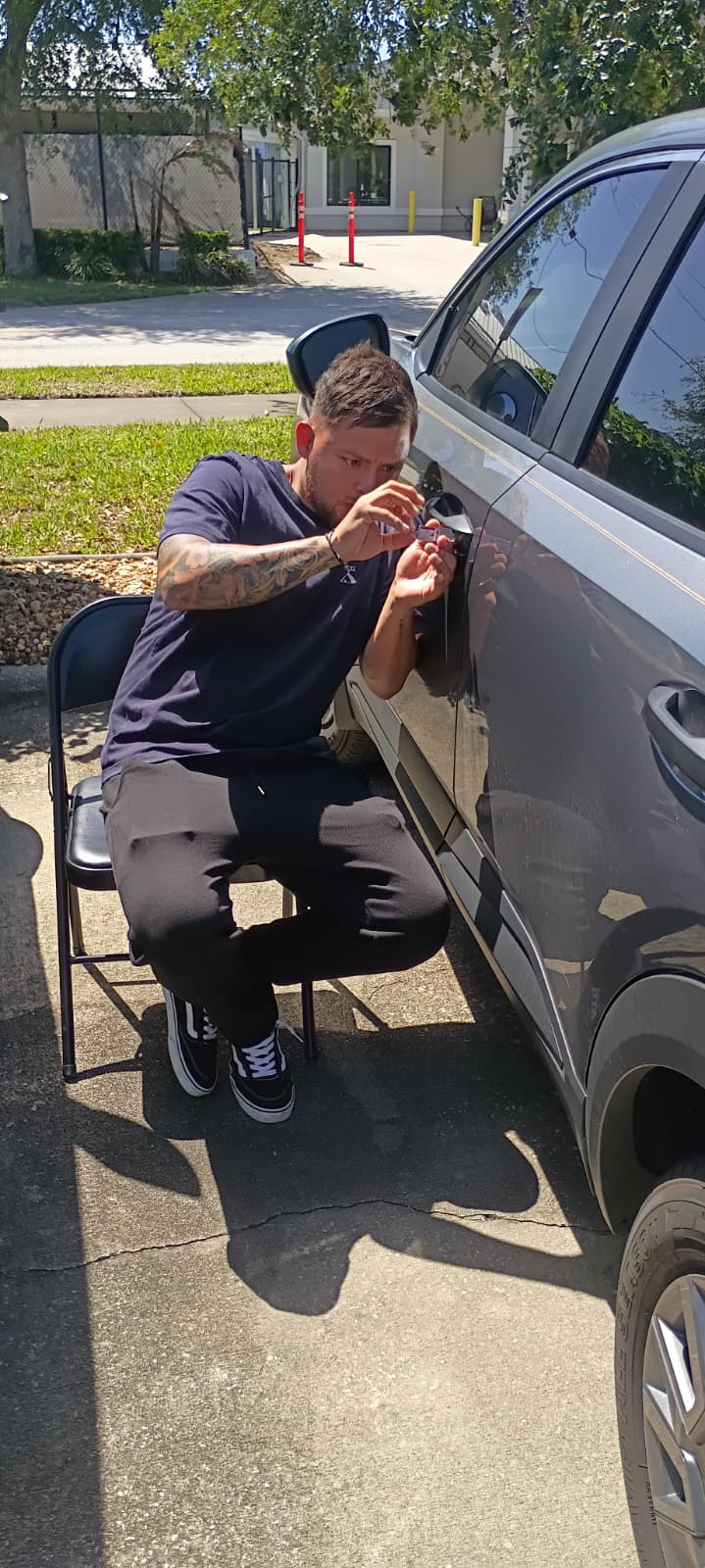
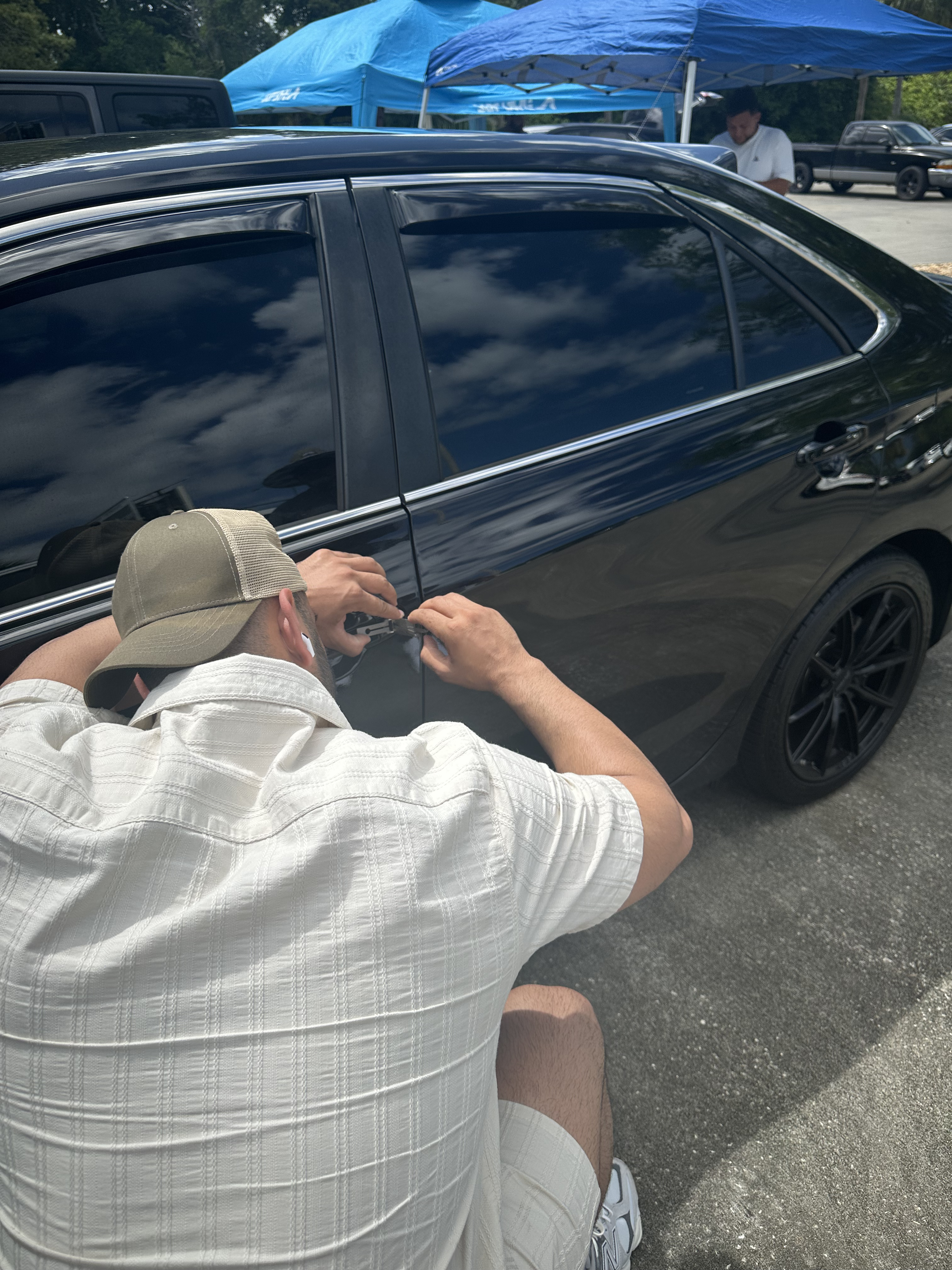
Lock Picking: Locksmiths can use specialized tools (Lishi or lock picks) to manipulate the lock's internal components to unlock the door without a key. This is commonly and most simply done using the Lishi 2-in-1 automotive picks. Here's how locksmiths typically use a lock pick to open car doors:
1. Insertion: The locksmith starts by inserting a lock pick tool into the keyway of the car door lock. The keyway is the opening where the key is normally inserted.
2. Tension Application: Applying “tension” or turning pressure on a lishi, the locksmith applies slight rotational pressure to the lock's core. This tension creates tension between the lock pins or wafers inside the lock.
3. Picking: The locksmith uses the lishi tool to manipulate the individual pins or wafers inside the lock cylinder. The goal is to lift and set each pin or wafer to the correct position.
4. Unlocking: Once all pins or wafers are in the correct positions, the lock's core can rotate freely, and the lock is unlocked.
5. Door Opening: With the lock unlocked, the locksmith can open the car door from the inside.
Lock picking is a skill that requires practice, experience, and a good understanding of lock mechanisms. It's essential to note that lock picking should only be performed by trained and authorized professionals, such as locksmiths, and used for legal and ethical purposes, such as assisting vehicle owners who have locked their keys inside. Attempting to pick a car lock without proper authorization is illegal and may cause damage to the vehicle.
Car Opening Techniques - Air Bags and Long Reach
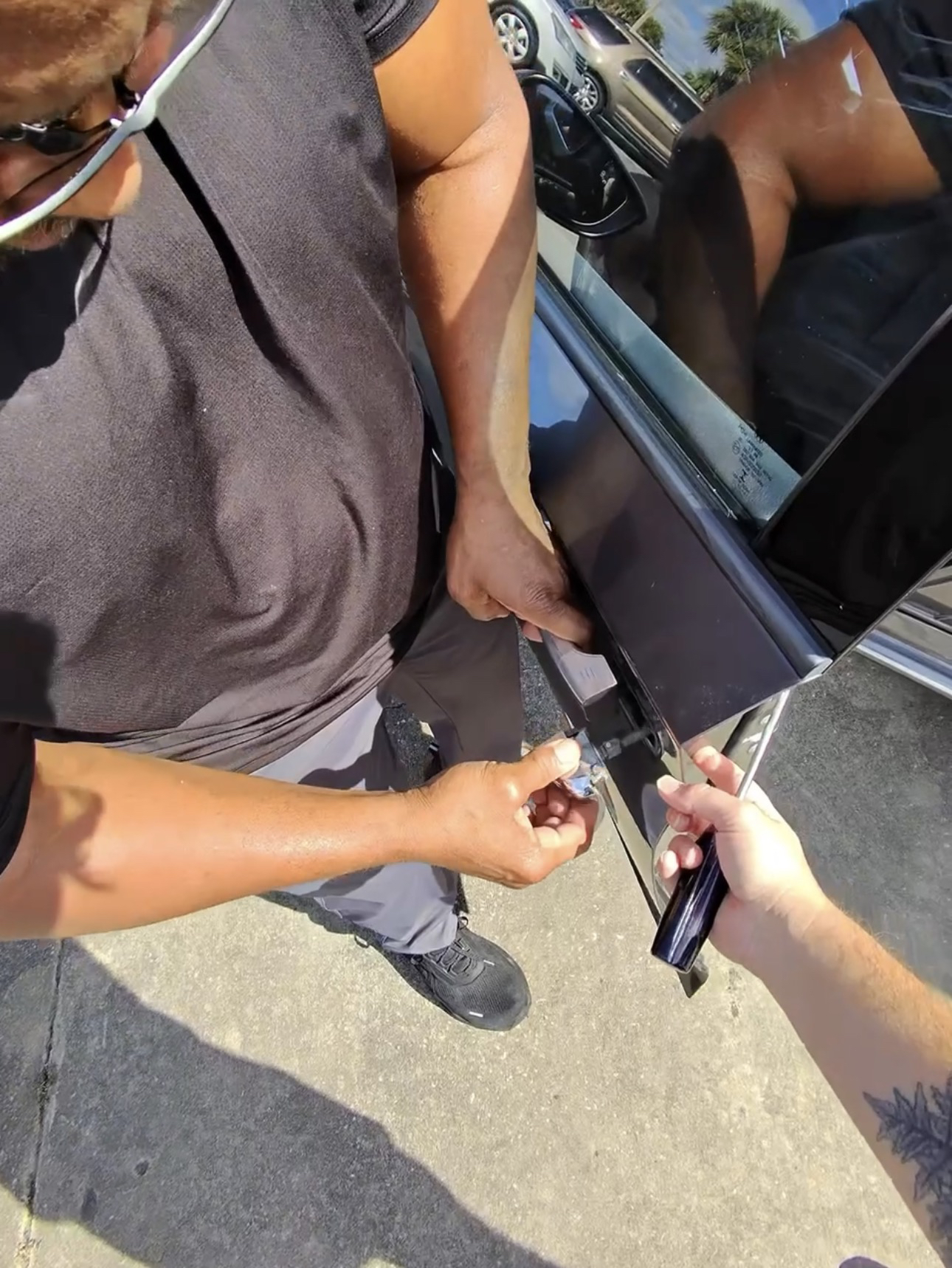
Air Bags and Long Reach: A long reach is a long, flexible rod with a hook shape at the end. Locksmiths use it to reach inside the vehicle through a narrow gap between the door and vehicle and unlock the door handles or power locks. Locksmiths can use an air bag and a long reach to create a gap between the car door and the frame. This gap allows them to reach inside and manually unlock the door by pulling the mechanical lock, pushing the unlock button, rolling down a window, or pulling the handle. Here's how locksmiths typically use an airbag and long reach to open car doors:
1. Insertion: The locksmith carefully inserts the long reach tool between the car door and the weatherstripping (the rubber seal around the door) at the top corner of the window.
2. Locate the Lock Button or Door Handle: Inside the car door, the locksmith uses the long reach tool to reach down and locate the lock button or door handle. The goal is to either press the unlock button or pull the door handle from the inside.
3. Manipulate the Lock Button or Door Handle: With the long reach tool, the locksmith pushes or pulls the lock button or door handle to unlock the door. This action mimics what a person inside the car would do to unlock the door.
4. Unlocking: With the correct movement and pressure applied to the lock button or door handle, the locksmith can unlock the door from the inside.
5. Opening the Door: Once the door is unlocked, the locksmith can either use the long reach tool to pull the interior door handle or manually open the door from the outside.
Long reach tools are designed to be flexible and have various shapes and hooks at the end to help locksmiths access the lock button or door handle inside the door. These tools are particularly useful for vehicles with power locks or central locking systems. However, they require skill and experience to use effectively without causing damage to the vehicle's door or interior components. Additionally, locksmiths must follow legal and ethical guidelines, ensuring they have proper authorization to unlock the vehicle.
Car Opening Techniques - "Slim Jims"
Slim Jim: A slim jim is a thin, flat strip of metal with a notch or hook at the end. Locksmiths and automotive professionals use slim jims as tools to unlock car doors that have manual locking mechanisms. Here's how locksmiths typically use a slim jim to open car doors:
1: Insertion: The locksmith carefully inserts the slim jim between the car door and the weatherstripping (the rubber seal around the door) near the top corner of the window.
2. Locate Locking Mechanism: Inside the door, there are connecting rods or levers that control the door's locking mechanism. The locksmith uses the slim jim to feel for and locate these rods or levers.
3. Manipulate the Mechanism: Once the locksmith has identified the position of the connecting rod or lever that controls the door lock, they use the slim jim to manipulate it. This often involves lifting, pushing, or pulling the rod or lever in a way that disengages the lock.
4. Unlocking: With the correct movement and pressure applied to the locking mechanism, the locksmith can unlock the door from the inside.
5. Opening the Door: Once the door is unlocked, the locksmith can either use the slim jim to pull the interior door handle or manually open the door from the outside.
It's essential to emphasize that the use of a slim jim requires skill and experience, and it's typically effective on older vehicles with manual locking systems. Modern cars with electronic or power locks are not susceptible to slim jim techniques, and attempting to use one on vehicles can cause damage to the door or internal components.
We are trained professionals who use their expertise and specialized tools to unlock cars legally and without causing damage. It's important for customers to call a locksmith in situations where they've locked their keys in the car or have lost their keys to ensure a safe and secure entry with no damage.
*Please note that attempting to unlock a car without proper authorization may be illegal and can result in damage to the vehicle. It's important to use these techniques responsibly and only in situations where you have a legitimate reason to access the vehicle.*
Which Key Works Which Car?
As a locksmith, having a clear understanding of which key works with specific year, make, and model of vehicles is instrumental for various practical reasons:
Generations of Car Keys.pdf Download PDF • 27.26MB
1. Job Acceptance and Inventory Management
Knowing the key blanks associated with different vehicles allows locksmiths to confidently accept jobs. They can assess whether they have the necessary key blanks in stock before committing to a service. This proactive approach enhances efficiency and customer satisfaction.
2. Tool Selection and Preparation
When aware of the key requirements for a particular vehicle, locksmiths can prepare the right tools and equipment in advance. This includes having the correct key cutting machines, transponder programming devices, and any specialized tools needed for specific models, like a Lishi that is used to pick and decode a lock to make a working key. This preparation streamlines the service process.
3. Speeding Up Service Delivery
Knowledge of key profiles accelerates the service delivery process. Locksmiths can quickly identify the appropriate key blanks, cutting methods, and programming procedures, significantly reducing the time it takes to complete a job. This efficiency is important to learn and will come with time and experience.
4. Preventing Damage and Errors
Using the correct key profiles helps prevent potential damage to the vehicle's locks and ignition. Attempting to use an incorrect key may result in broken keys, damaged lock cylinders, or other issues. By ensuring the right key is used, locksmiths minimize the risk of errors and enhance the overall quality of service.
5. Enhancing Customer Experience
A locksmith who arrives at a job fully prepared, armed with the correct key blanks and tools, enhances the customer experience. Clients appreciate swift and efficient service, and this knowledge contributes to positive customer interactions.
6. Maintaining Professional Standards
A locksmith who possesses in-depth knowledge of key profiles demonstrates professionalism. It reflects a commitment to precision and expertise, fostering trust among clients and within the locksmithing industry.
In essence, understanding what key works with which vehicle is not just about technical proficiency; it's a strategic approach that contributes to the overall success and reputation of a locksmithing business. It aligns with efficiency, customer satisfaction, and the ability to provide top-notch services in a dynamic and evolving automotive landscape.
The type of key a customer's car uses is a fundamental factor. It could be a traditional metal key, a transponder key with an embedded chip, a keyless entry fob, or a smart key with proximity features. The cost of these are different and it's essential to have the correct key for their vehicle to ensure it operates correctly and securely. Keys are typically specific to a particular make, model, and year of a vehicle. For example, a key that works with a Toyota Camry will not work with a Ford F-150. Determining which key works with a specific car typically involves identifying key-related information and verifying it against the vehicle's lock and ignition system. Some websites and databases may offer key information for specific vehicle makes and models.
ILCO Automotive Key Blank Directory
Attached below is the 2023 Ilco Automotive Key Blank Directory. This is a great resource for study regarding which key blanks operate which vehicle. Keep in mind that MANY of the keys in this catalog apply to vehicles that are not here in the United States. Ilco is one of the top companies in the world for manufacturing key blanks so this is the full catalog.
ILCO Auto Key Blank.pdf
Download PDF • 8.57MB
Wrap Up
Congratulations, future automotive locksmith! You've completed a crucial phase of your training, mastering the art of identifying keys, unlocking cars, and building a strong foundation in automotive locksmith terminology. As you move forward in your journey, remember that your expertise plays a pivotal role in helping people regain access to their vehicles, ensuring their safety, and providing peace of mind. Continue to hone your skills, stay updated with industry advancements, and always prioritize ethics and professionalism in your work. Your dedication to this craft is the key to your success. Best of luck as you embark on your locksmithing careers!